
The numbers nobody on your buying committee wants to see:
- DRAM costs: up over 170 percent year on year
- Server memory lead times: stretched past 40 weeks
- Server CPU lead times: around six months
- Broadcom VMware price increases: 150 to 1,000 percent across the industry
- 2026 server shipment growth: downgraded from 20 percent to 13 percent
The renewal on your desk and the quote in your inbox
You've made the call. Broadcom's pricing and licensing changes have pushed your VMware renewal somewhere between uncomfortable and indefensible, and Nutanix is your destination. The business case is signed, the technical evaluation is done, and you're ready to move.
Then the reseller comes back with the hardware quote. Lead time on the new Nutanix nodes is 30 plus weeks. The price is higher than you budgeted for, and it can only be held for 24 hours.
So now you have two unattractive options. Stay on VMware and absorb a renewal you've already told the board you're escaping. Or commit to the migration with no firm landing date for the kit you need to land on.
This is the trap a lot of organizations are walking into right now, and it's not a procurement problem. It's a market problem.
Why this is happening, and why it isn't getting better soon
The Broadcom side of the story is the one most IT leaders already know. Subscription-only licensing, a 72-core minimum purchase per order line, a 20 percent late renewal fee, and price increases reported across the industry of anywhere from 150 to over 1,000 percent. Nutanix has publicly said around 30,000 customers have already migrated off VMware, with thousands more in what their CEO described as the "second wave,” those who waited to see how things played out and are now looking to move.
The hardware side is newer, less understood, and arguably more dangerous to your project plan.
Server DRAM costs surged more than 170 percent year on year by late 2025 and have continued to climb into 2026. NAND and SSD pricing roughly doubled in a matter of months. Lead times that historically averaged eight to 12 weeks are now stretching to 20, 30, even 40 plus weeks depending on module type. Pricing is so volatile that quotes are being held for as little as 24 hours. Server CPU lead times are sitting around six months. TrendForce has cut its 2026 server shipment growth forecast from 20 percent to 13 percent.
The reason is simple, and it should worry every IT decision maker who isn't a hyperscaler. Memory manufacturers like Samsung, SK Hynix, and Micron have shifted production toward High Bandwidth Memory for AI accelerators, because that's where the margin is. Standard DRAM and NAND, the kind that goes into the servers your business actually runs on, has been deprioritized. The same dynamic is playing out across CPUs, power management chips, and even hard disk drives.
Here's the part that should land hardest. In a shortage market, hardware procurement stops being a transaction and starts being an auction. When you put your purchase order in, you're competing for allocation against hyperscalers and AI infrastructure buyers who will pay more than you will, faster than you can, with bigger volumes than you have. You don't lose the auction because your reseller didn't try. You lose it because the economics of the room aren't built for you.
So the practical question is no longer "when can we get the hardware?" It's "what do we do until we can?"
The bridge: NC2 and HYCU R-Cloud
This is where the story changes from a problem to a plan.
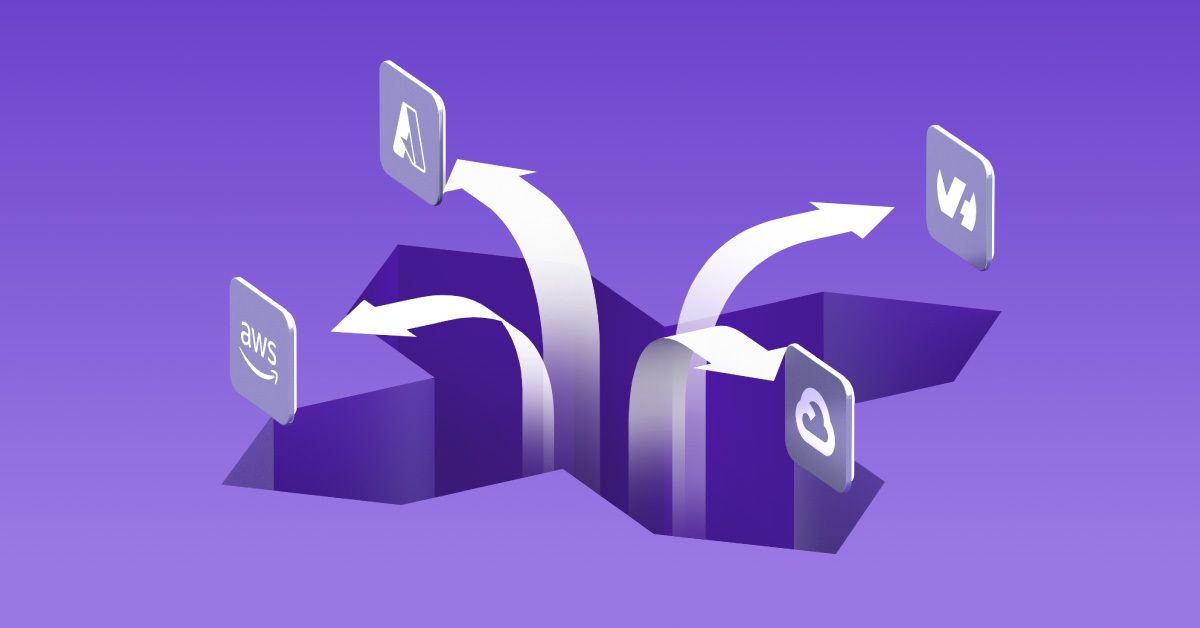
Nutanix Cloud Clusters, NC2, lets you stand up the Nutanix platform inside AWS, Azure, GCP, or OVHcloud, running on hyperscaler infrastructure, today. No waiting for nodes to land in your data centre. No procurement queue. You move your VMware workloads onto Nutanix in the cloud, on the timeline your Broadcom situation actually demands, not the timeline your hardware supplier can offer.
HYCU is purpose-built for Nutanix and operates natively across every NC2 environment: AWS, Azure, GCP, and OVHcloud. Whichever cloud you choose for the bridge, HYCU R-Cloud is already there, protecting your workloads with the same Nutanix-native integration customers rely on for their on-premises clusters.
HYCU writes those backups to your choice of object storage, including Wasabi hot cloud storage. This matters more than it might first appear. The bridge phase is, by definition, a phase of data movement. You're going to be writing backups, you're going to be running restore tests to validate the migration, and eventually you're going to be repatriating data when your on-premises kit lands. Most cloud storage providers meter and bill every one of those operations. Wasabi charges zero egress fees and zero API request fees, which means the cost of the bridge stays predictable regardless of how much data you move in, out, or sideways during the project.
When the hardware finally arrives, or pricing normalises enough to make the on-premises move economical, HYCU gives you choice. Repatriate the backup chain to your new on-premises Nutanix cluster. Leave the backups in Wasabi for long-term retention. Run both. Whatever fits your data protection strategy, your compliance position, and your budget. The platform doesn't dictate the answer, you do.
That's flexibility, not lock-in.
Hardware-agnostic backup means hardware-proof economics
Now let's talk about the part of this story that extends well beyond the migration itself.
If you're escaping Broadcom because you don't want your virtualization costs tracking a vendor's pricing strategy, the last thing you should do is sign yourself into a backup contract whose pricing tracks the hardware market.
Appliance-based backup vendors are exposed to exactly the same shortage your Nutanix project just had to navigate around. When DRAM is up 170 percent and server lead times are 40 weeks, those vendors' renewal quotes and expansion quotes reflect that. The sticker shock you felt on Broadcom is the sticker shock you'll feel on appliance backup. Different vendor, same chip market, same problem.
HYCU R-Cloud is software. It's storage-target agnostic. It isn't bundled to a proprietary hardware SKU and your renewal pricing doesn't move with DRAM spot prices. The economics of protecting your data are decoupled from the economics of buying memory.
Pair that with Wasabi's flat, predictable storage pricing, and the picture changes. Predictable software, predictable storage, predictable bill at the end of every quarter. Your data protection budget stops being a hostage to global supply chains.
Wasabi as the expansion lever
There's a related scenario worth calling out, because it's happening to a lot of organizations right now.
You're not migrating off VMware. Your existing infrastructure is fine. But your data has grown, your retention requirements have changed, or your last ransomware tabletop exercise made it very clear you need more capacity. So you go to expand your appliance-based backup solution.
Same problem. The expansion shelf, the additional nodes, the new cluster member, all of it has to come from the same constrained hardware market. You're back in the auction, with your renewal cycle as the deadline.
HYCU R-Cloud writes directly to Wasabi hot cloud storage. No gateway, no extra components, no additional licensing, no integration project. It's a configuration change, not a procurement project. You add the capacity you need, when you need it, and you don't wait 40 weeks to do it.
The economics of this are worth lingering on. Backup is a workload defined by writes, occasional reads, restore tests, and full restores during incidents. With most cloud storage providers, every one of those is a billable event. Egress fees on restore. API charges on every operation. The headline storage rate looks low, then the bill at the end of the month doesn't.
Wasabi charges zero egress fees and zero API request fees. The implication for backup operations is direct. Restore testing has no marginal cost, which means restore testing actually happens, which means recovery actually works when you need it. Full restores during a real incident don't generate a second crisis on the finance side. The bill at the end of the month reflects the data you stored, not the data you used.
The reframe
Bring the IT decision maker from the start of this piece back to the desk.
The Broadcom renewal is still there. The hardware lead times haven't changed. The market is what it is.
But the migration doesn't stall. NC2 gives you somewhere to land while you wait for the kit, and HYCU R-Cloud protects you natively across whichever hyperscaler you choose. The renewal doesn't trap you, because your data protection economics aren't tied to the same hardware market that's pricing you out. The expansion doesn't depend on a 40-week lead time, because Wasabi is one configuration change away. And the storage bill at the end of every month doesn't punish you for actually using your backups.
That's what hardware-agnostic, storage-target agnostic data protection looks like in practice. Built for Nutanix. Ready for NC2 across AWS, Azure, GCP, and OVHcloud. Paired with Wasabi for predictable, no-egress, no-API-fee cloud storage.
The hardware crunch is a real problem. It doesn't have to be your problem.
See it in action. Take the HYCU for Nutanix product tour and see how HYCU R-Cloud protects your Nutanix environment, on-premises and across every NC2 cloud.
Get the newest insights and updates
By submitting, I agree to the HYCU Subscription Agreement , Terms of Usage , and Privacy Policy .